
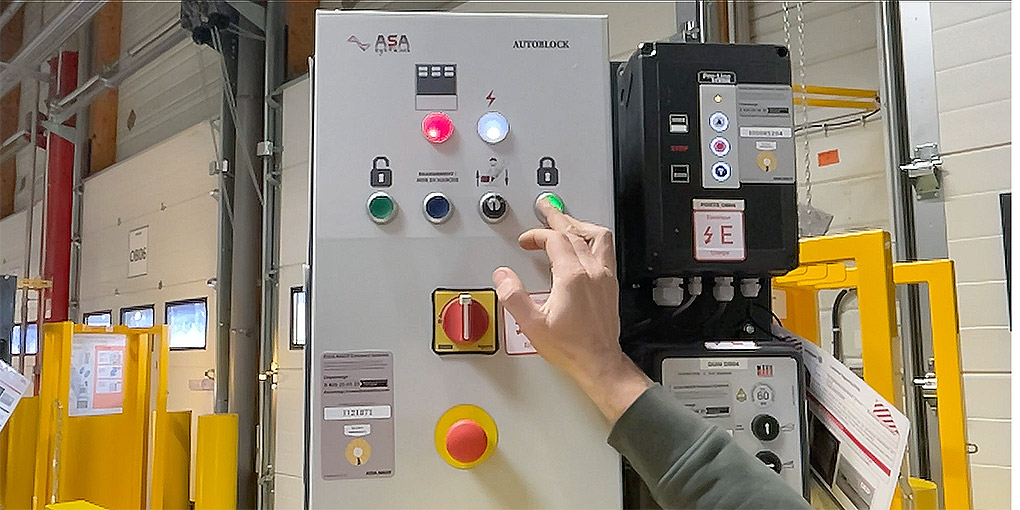
Truck restraint at the loading dock is activated from inside the building.
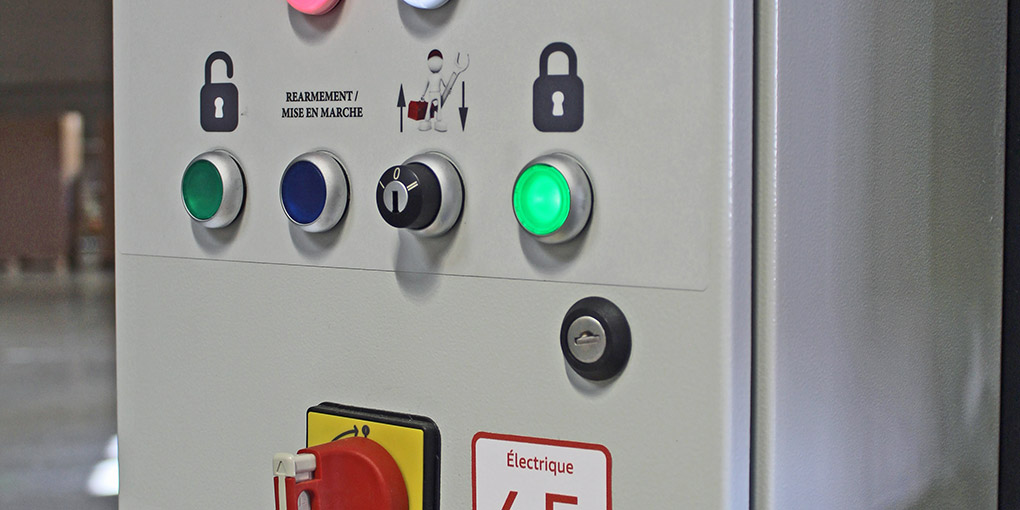
All docking safety functions are controlled from this operating panel.
Keeping full control of transshipment safety
By not placing the responsibility for truck immobilization on the driver, the company retains full control over its docking procedures.
In order to prevent risks linked to interference between site operations, installations and equipment and transport company docking activities, occupational health and safety authorities require the implementation of a safety protocol between the employers concerned.
Once completed and supported by a site layout plan, this safety protocol can also facilitate the training of personnel from the companies involved.
Unfortunately, few drivers are fully aware of the dock procedures at their delivery sites, and some are unable to understand instructions due to language barriers. This is why more and more companies are taking direct control of their transshipment procedures by removing the responsibility for immobilizing the truck from the driver. Drivers do not receive specific instructions regarding docking operations; communication is kept to a minimum in order to avoid misunderstandings: green light, permission to dock – red light, prohibition to leave.
Inside the building, material handling personnel are informed that the truck is positioned at the dock. They initiate the truck restraint themselves. The Autodock wheel restraint detects the position of the trailer’s rear wheel and secures it, thereby unlocking the next steps of the process: partial opening of the sectional door, deployment of the dock leveler, and full opening of the door.